Florida Panhandle Homeowners Weigh Maintenance, Cost, and Aesthetic Goals
Graceville, United States – February 27, 2026 / Countryside Lawn Care /
Property owners designing new landscape beds or refreshing existing areas face a fundamental choice between organic mulch and decorative rock. The decision involves tradeoffs between initial cost, maintenance frequency, soil health impacts, and visual outcomes that affect properties for years. Each material delivers distinct performance characteristics depending on bed purpose, surrounding plantings, and property conditions. Countryside Lawn Care addresses this planning question for Florida Panhandle and southeast Alabama property owners evaluating bed materials. Landscape design considerations extend beyond material selection to include bed preparation, edging installation, and maintenance approaches that determine long-term satisfaction.
Understanding Material Performance Differences
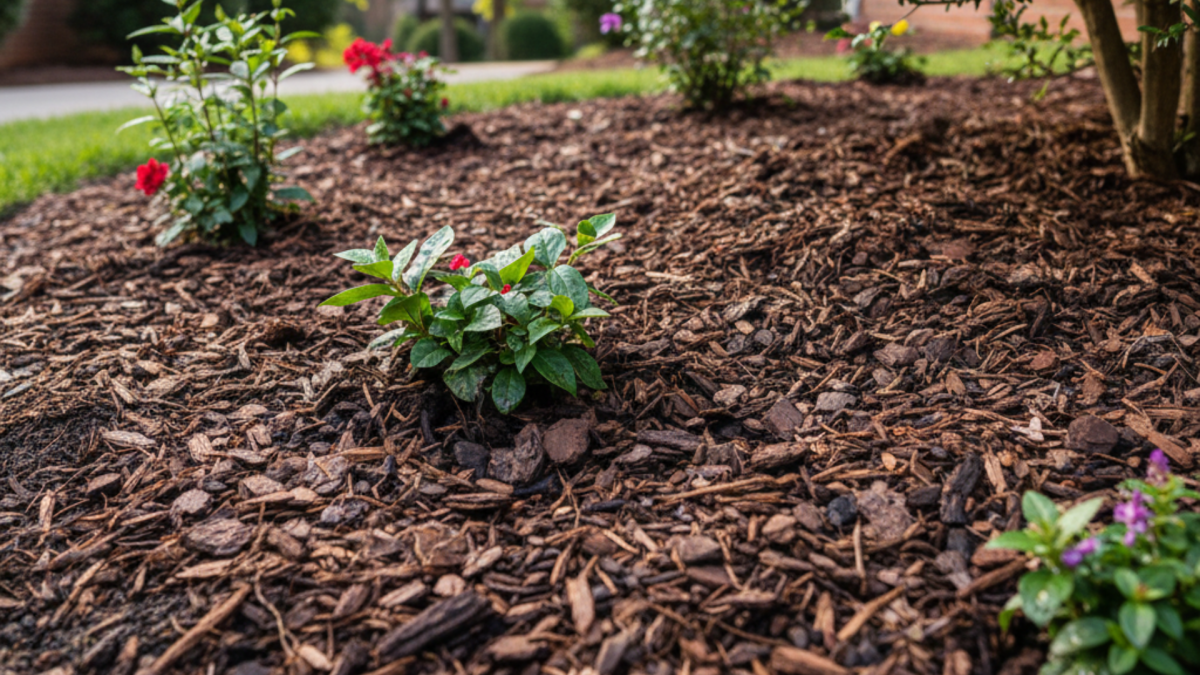
Organic mulch breaks down gradually, adding nutrients to soil while improving moisture retention and temperature moderation. Wood-based mulches require replacement every 12 to 24 months as decomposition depletes depth and appearance deteriorates. This natural breakdown process benefits plants but creates ongoing maintenance needs. Color fades under sun exposure, requiring refreshing to maintain visual appeal. Mulch shifts during heavy rain, requiring redistribution to maintain even coverage.
Decorative rock remains stable indefinitely without decomposition or color fade. Initial installation costs more than mulch due to material weight and placement labor, but rock eliminates replacement expenses for many years. Rock does not improve soil conditions or provide organic matter benefits. Heat retention in rock beds can stress plants during summer months. Weed prevention requires landscape fabric underneath, and weeds that penetrate fabric prove harder to remove from rock than mulch.
The cost analysis extends beyond initial purchase. Mulch costs less upfront but accumulates expense through repeated replacement. Rock represents higher immediate investment but spreads cost over extended periods without replacement. Property owners evaluating total expenditure over five to ten years often find different conclusions than initial price comparison suggests.
How Material Choice Affects Long-Term Outcomes
Maintenance requirements differ substantially between mulch and rock beds. Mulch demands annual or biennial replacement to maintain depth and appearance. Decomposition means beds gradually lose volume even between refreshing cycles. Replenishment involves removing old material partially or adding fresh mulch over existing layers until buildup requires starting fresh. This cycle creates predictable recurring maintenance.
Rock beds require minimal replenishment but need different care. Leaves, debris, and organic matter accumulate on rock surfaces, requiring removal to maintain clean appearance. Blowing or raking debris from rock proves more difficult than from mulch. Over time, soil and organic matter settle between rocks, supporting weed growth that landscape fabric alone doesn’t prevent. Cleaning rock beds to remove accumulated debris and weeds takes more effort than refreshing mulch.
Plant health responds differently to each material. Mulch moderates soil temperature, retains moisture, and supplies organic matter as it decomposes. These characteristics benefit most ornamental plantings and shrubs. Rock amplifies heat, reflects sun, and provides no soil improvement. Some plants thrive in these conditions while others struggle. Material choice should align with existing or planned plantings rather than being decided independently.
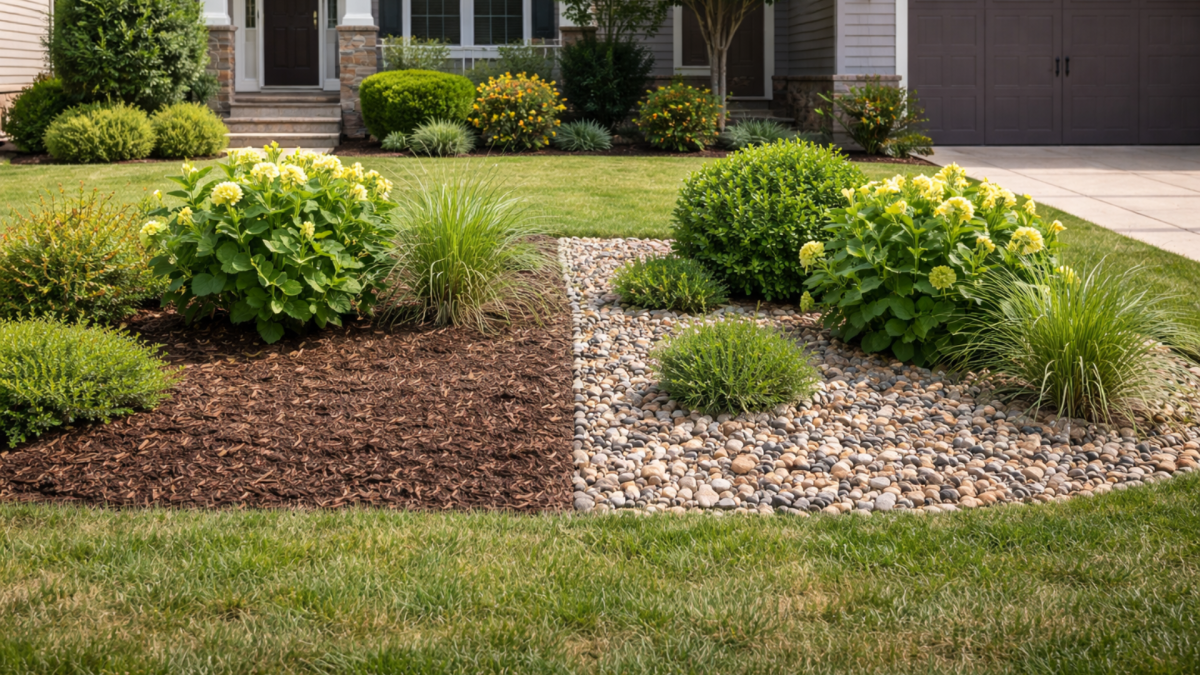
Aesthetic considerations influence property appearance in ways that affect satisfaction regardless of practical performance. Mulch provides natural, organic appearance that suits traditional landscaping. Color options allow coordination with property style. Rock offers contemporary, clean-lined appearance that works well with modern architecture. Mixed approaches using both materials in different bed areas can achieve varied visual effects while addressing different functional needs.
How Material Decisions Get Evaluated in Practice
Countryside Lawn Care evaluates mulch versus rock decisions based on bed purpose, surrounding plantings, property style, and realistic expectations about maintenance commitment. Foundation beds near homes often use mulch for moisture retention and temperature moderation that protect plantings. High-visibility areas where appearance matters year-round may favor rock’s stability and fade resistance.
Existing property characteristics influence recommendations. Properties with extensive tree cover accumulate leaves and debris that make rock beds more difficult to maintain. Open areas with minimal leaf fall accommodate rock more easily. Slope affects both materials differently. Mulch on steep slopes requires erosion control measures and redistributes during heavy rain. Rock on slopes stays in place but can shift if not properly contained.
Planting density matters when selecting bed materials. Densely planted beds where plant coverage eventually hides most bed surface make mulch practical since appearance becomes less visible. Sparse plantings where bed material remains highly visible favor rock’s long-term appearance stability. Understanding how beds will evolve as plants mature prevents material choices that work initially but prove problematic years later.
Budget timing influences decisions. Property owners with immediate budget availability often choose rock to eliminate recurring costs. Those preferring to spread expenditure over time select mulch for lower upfront investment despite knowing replacement needs. Neither approach is inherently better, the right choice depends on individual financial planning preferences.
Considerations Specific to Regional Properties
Property owners in Graceville, Marianna, Dothan, and surrounding areas encounter climate conditions that affect material performance. Summer heat intensity makes rock’s temperature amplification more significant than in cooler climates. Heavy rainfall during spring and summer affects mulch stability and decomposition rates. Pine needle accumulation from prevalent pine trees creates maintenance challenges particularly noticeable in rock beds.
Mulch and rock installation services address bed projects where material selection aligns with property conditions and maintenance preferences. Proper bed preparation, quality landscape fabric installation, and appropriate edging determine performance regardless of material selected. Understanding what each material accomplishes versus limitations prevents unrealistic expectations about maintenance requirements.
Supporting Property Owners Throughout Multiple Communities
Countryside Lawn Care works as an established service provider across the Florida Panhandle region, addressing landscape bed questions with straightforward explanations of how different materials perform under local conditions. Communication emphasizes helping property owners understand tradeoffs based on their specific priorities rather than defaulting to universal recommendations.
Service relationships often evolve from single bed installation projects into ongoing maintenance as property owners recognize value in consistent professional care. The company maintains focus on solutions that match property characteristics and owner expectations rather than promoting specific materials regardless of circumstances. This approach builds trust necessary for successful outcomes and long-term partnerships.
Preventing Common Material Selection Problems
Property owners who carefully evaluate mulch versus rock decisions before beginning bed projects prevent disappointment from maintenance demands that exceed expectations, costs that accumulate unexpectedly, or aesthetic results that don’t align with property style. Decisions based solely on initial cost ignore factors that determine long-term satisfaction. Underestimating how climate, plantings, and property characteristics affect material performance leads to regret regardless of which material gets selected.
Countryside Lawn Care provides consultation for Florida Panhandle and southeast Alabama property owners planning landscape bed projects. Property-specific evaluation addresses existing conditions, planting plans, maintenance preferences, and realistic expectations about material characteristics. Interested property owners can reach the company at 850-813-4482 or visit mycountrysidelawn.com for additional information. Informed material selection during planning prevents the expense and disruption of switching materials after discovering initial choices don’t meet property needs.

Contact Information:
Countryside Lawn Care
1207 HIGHWAY 2
Graceville, FL 32440
United States
Contact Countryside Lawn Care
(850) 813-4482
https://mycountrysidelawn.com/

Original Source: https://mycountrysidelawn.com/media-room


