Landscape St. Louis Addresses Common Questions About Lighting Integration Timing
St. Louis, United States – February 27, 2026 / Landscape St. Louis /
Deciding When Lighting Enters the Project Timeline
Property owners face a recurring question during landscape planning: should outdoor lighting be integrated during initial installation or added after other elements are complete? This decision affects project coordination, installation efficiency, and long-term functionality. Landscape St. Louis has published guidance addressing outdoor living area development sequencing, including lighting coordination considerations that influence both immediate outcomes and future flexibility.
The choice involves more than preference. Timing affects conduit placement, fixture positioning relative to hardscape elements, and the extent of excavation or disruption required. Homeowners throughout the St. Louis area benefit from understanding these implications before committing to a particular approach.
Why This Question Creates Planning Uncertainty
Many property owners assume lighting can be easily added to completed landscapes without complication. This belief stems from the visibility of fixtures themselves rather than the infrastructure supporting them. Proper outdoor lighting requires buried conduit, transformer placement, junction box positioning, and coordinated wiring that integrates with landscape features.
When lighting gets deferred to a later phase, several challenges emerge. Completed hardscape installations limit access for conduit trenching. Established plantings may occupy locations where fixtures would ideally be positioned. Finished grade work gets disturbed to accommodate electrical infrastructure. These complications increase installation complexity and often compromise optimal placement.
The cost implications also differ from initial expectations. Retrofitting lighting into completed landscapes typically requires more labor due to working around existing elements. Protected areas need covering. Finished surfaces require careful handling. The efficiency gained from coordinated installation during initial construction gets lost.
Property owners also misjudge how lighting absence affects usability during the interim period. Outdoor living spaces that lack illumination see dramatically reduced use after sunset. Pathways become less safe. Architectural features that define the landscape design lose visibility during evening hours. The value derived from completed hardscape installations diminishes without proper lighting integration.
Another common misconception involves thinking all lighting decisions can be made independently. Fixture placement relates directly to walkway locations, patio configurations, and planting positions. Attempting to optimize lighting after these elements are fixed reduces design coherence. The integrated effect that makes outdoor spaces feel intentional and polished becomes harder to achieve.
How Integration Timing Affects Project Outcomes
Coordinating outdoor lighting with initial landscape installation creates opportunities for optimal placement and efficient infrastructure development. Conduit routing happens during excavation for patios, walkways, or retaining walls, minimizing separate trenching. Fixture locations get determined relative to final hardscape positions rather than approximated in advance.
The design process also benefits from simultaneous consideration. When lighting is planned alongside hardscape layouts, fixture placement reinforces architectural lines, highlights focal points, and creates layered illumination that enhances depth and dimension. Pathway lighting aligns with actual walking patterns. Uplighting positions correspond to mature plant sizes and key structural elements.
Electrical planning becomes more straightforward when lighting is integrated from the start. Transformer sizing accounts for complete fixture loads. Circuit planning distributes power appropriately. Switching and control systems get installed once rather than expanded later. This coordination reduces future modification needs.
For properties involving multiple outdoor living zones, integrated lighting creates continuity between spaces. Consistent fixture styles, coordinated light levels, and unified control systems make transitions between areas feel natural. Retrofitted lighting often results in mismatched fixtures or illumination levels that vary unpredictably between zones installed at different times.
Properties with challenging grade conditions or drainage considerations benefit particularly from coordinated lighting installation. When drainage solutions like French drains or grading modifications happen simultaneously with lighting infrastructure, potential conflicts get resolved during initial planning rather than discovered during retrofit attempts.
The installation timeline also compresses when lighting is integrated. Single mobilization covers multiple project components. Crews coordinate excavation, installation, and finish work across all elements. Property disruption occurs once rather than recurring for separate phases.
Evaluating Lighting Integration in Real Projects
Landscape St. Louis approaches lighting decisions by examining how properties will actually be used. Evening entertaining, safe pathway navigation, and architectural feature emphasis create specific lighting requirements. Understanding these priorities helps determine which fixtures serve functional needs versus those providing aesthetic enhancement.
The evaluation considers existing infrastructure and access points. Properties with convenient electrical sources near outdoor living areas face different installation considerations than those requiring extensive wiring runs. Transformer locations need weather protection and maintenance accessibility while remaining unobtrusive.
Material selections for hardscape elements also influence lighting coordination. Paver driveways, patios and walkways, and retaining walls each create specific opportunities for integrated fixture placement. Step lighting in outdoor stairs, for example, requires planning during stair construction rather than attempting to retrofit fixtures into completed structures.
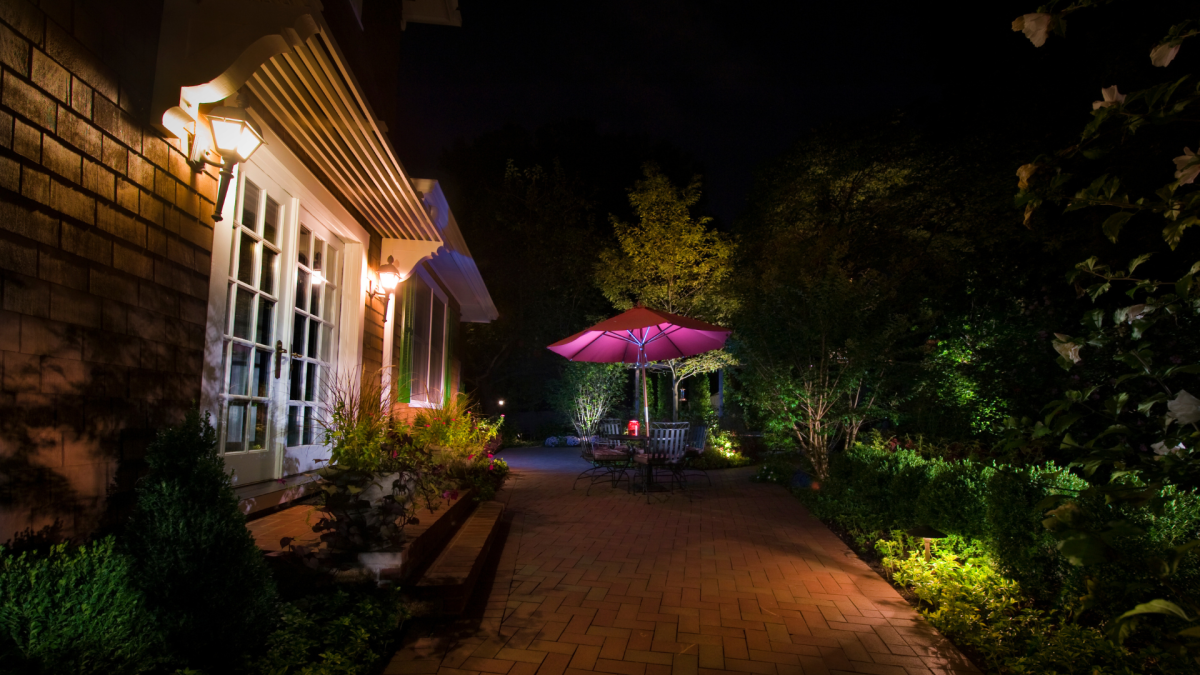
Design renderings help property owners visualize how lighting affects spaces during evening hours. Seeing illuminated patios, highlighted plantings, and lit pathways provides clearer understanding of the functional and aesthetic value lighting delivers. This visualization often clarifies whether integrated installation justifies the investment versus deferring lighting indefinitely.
The company’s perspective emphasizes that lighting decisions made during initial planning remain reversible, but attempting to optimize lighting after hardscape completion limits options permanently. Conduit installed during construction provides future flexibility even if all fixtures are not immediately connected.
What Property Characteristics Influence These Decisions
Mature tree canopies affect both lighting needs and fixture placement strategies. Properties with established shade may require different illumination approaches than newly landscaped areas. Understanding how tree growth will affect light distribution over time prevents future adjustments.
St. Louis area properties often feature grade changes that create opportunities for integrated lighting within retaining walls or along outdoor stairs. Professional landscape design services account for these features during planning, positioning fixtures to emphasize architectural elements while providing practical illumination.
Irrigation system placement also intersects with lighting infrastructure. Coordinating both during initial installation prevents conflicts between water lines and electrical conduit. Properties requiring drainage and grading work benefit from addressing all underground infrastructure simultaneously.
Communication Approach and Local Service
The company prioritizes clear explanations about lighting integration tradeoffs. Clients receive practical information about installation timing implications, cost factors, and functional outcomes associated with different approaches. This communication style helps property owners make decisions aligned with their priorities and budgets.
Homeowners researching landscape lighting options benefit from understanding how these choices affect project timelines and results. The company’s experience with varied property types and client preferences informs recommendations that balance ideal outcomes with practical constraints.
Ongoing client relationships often include future lighting additions as properties evolve. Initial infrastructure planning that accommodates expansion allows for phased implementation when appropriate. This flexibility serves clients who want lighting integration benefits without immediate full installation.
Preventing Future Complications Through Early Planning
Property owners who defer lighting decisions until after hardscape completion often face higher costs, compromised placement options, and additional property disruption. Understanding these risks during initial planning prevents disappointment and unexpected expenses. Coordinated installation delivers better functional outcomes and preserves design integrity that separate installations struggle to match.
Landscape St. Louis provides information about outdoor lighting integration timing and placement considerations for St. Louis area properties. Contact the company at 314-876-8064 to discuss lighting coordination with planned landscape projects or additions to existing outdoor spaces.


Contact Information:
Landscape St. Louis
2601 McCausland Ave
St. Louis, MO 63143
United States
Contact Landscape St. Louis
(314) 876-8064
https://landscapestlouis.com/


Original Source: https://landscapestlouis.com/media-room/


