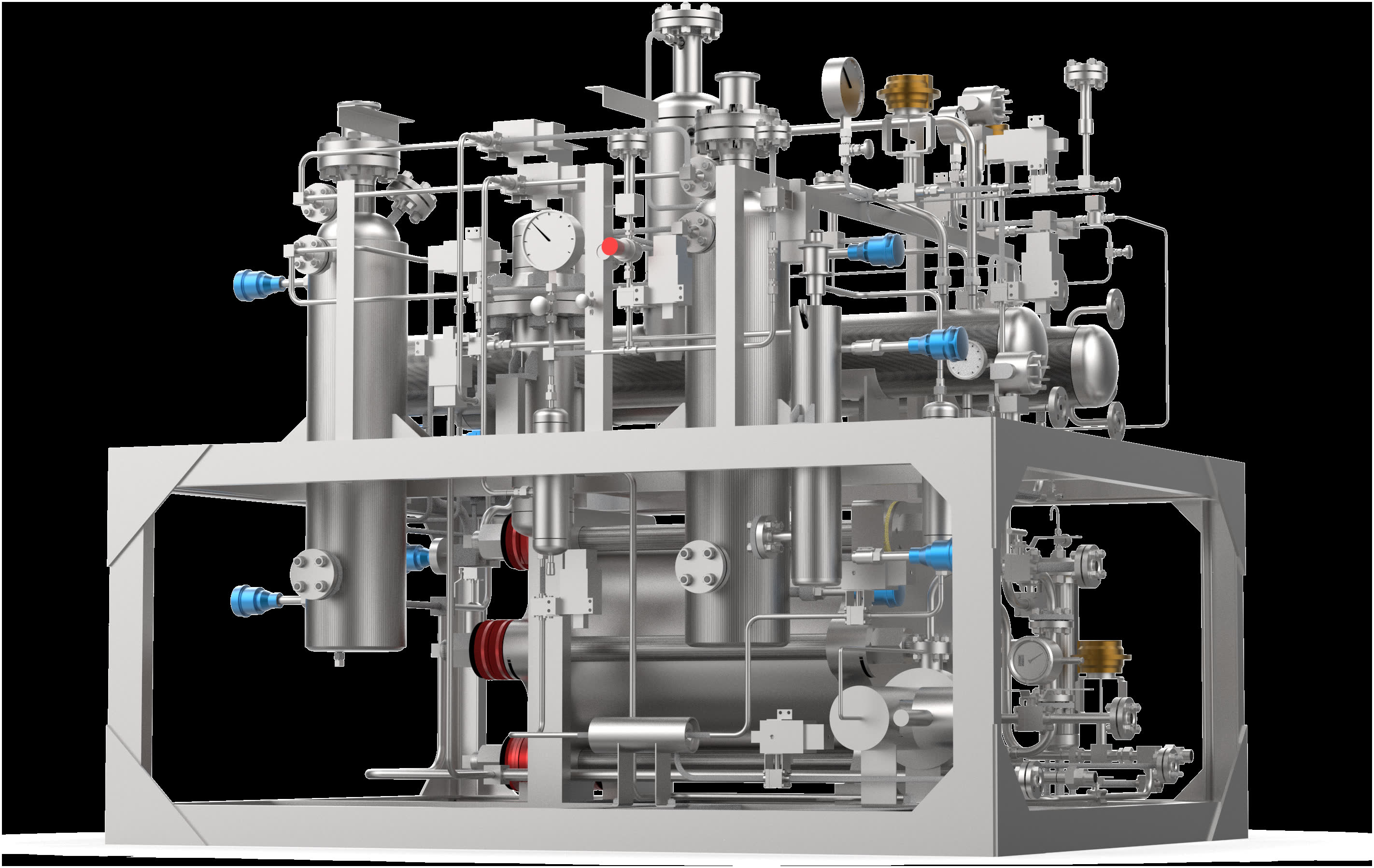
CHENGDU, SICHUAN, CHINA, November 3, 2026 /EINPresswire.com/ — Engineering procurement teams contrasting a China leading PEM Supplier against industrial alkaline electrolysis quickly recognize that cell chemistry alone does not dictate commercial plant success. Technology selection directly alters power conversion architectures, feed-water preparation systems, gas purification loops, compression duties and overall control strategies. Sourcing directors must trace the complete process train from raw utilities to delivery gas. Houpu’s documented alkaline system configuration demonstrates how balanced equipment design enables reliable, multi-megawatt operational performance.
Trace the Hydrogen-Production Flow from Utilities to Product Gas
A complete hydrogen production facility operates as an interdependent thermodynamic system. Comparing competing technologies requires tracing the entire utility-to-product process chain from incoming feedstocks through final purification stages.
The complete process train begins with power conversion, transforming alternating current into regulated low-voltage direct current through heavy-duty rectifiers. Feedstock water passes through multi-stage demineralization beds to achieve required electrical conductivity limits before entering the electrolyzer cells. Within the cell stack, electrochemical water splitting releases hydrogen and oxygen streams that travel into dedicated gas-liquid separation vessels. Finally, catalytic deoxypurification reactors and regenerative desiccant dryers strip out residual moisture, oxygen and trace contaminants to guarantee commercial hydrogen purity.
Following initial purification, product gas moves through intermediate pressure regulation, multi-stage booster compression, cascade storage and distribution headers. Centralized plant safety systems and programmable logic controllers monitor operating parameters across all stages. Evaluating an electrolyzer solely by stack dimensions risks ignoring the substantial capital expenditure and engineering coordination demanded by the surrounding balance of plant.
How PEM Architecture Changes the Configuration
Proton exchange membrane electrolysis utilizes a solid polymer electrolyte membrane that conducts protons while isolating product gases. This solid architecture eliminates circulating liquid electrolytes, simplifying primary separation skids. However, evaluating a PEM supplier vs alkaline electrolysis reveals significant downstream engineering considerations.
PEM cell stacks operate under strict feed-water conductivity requirements, demanding multi-bed deionization and continuous polishing loops. Operating stacks at elevated current densities generates concentrated heat loads that necessitate high-capacity chilling loops. While PEM stacks discharge raw hydrogen at higher pressures, balancing cell differential pressures under fluctuating power profiles requires complex pneumatic control valving.
Sourcing teams must also recognize that stack compactness does not automatically translate into a smaller project footprint. High-frequency rectifiers, harmonic mitigation filters, closed-loop cooling towers and nitrogen purging systems occupy considerable plant area. Claims regarding rapid dynamic response require evaluation at the complete-system boundary, factoring in auxiliary gas dry-out times and header repressurization delays.
How Alkaline Architecture Changes the Configuration
Pressurized alkaline systems rely on a liquid potassium hydroxide electrolyte circulating through robust bipolar filter-press electrolyzers. This proven architecture utilizes nickel-plated electrodes and porous diaphragms, avoiding expensive platinum-group metals. The alkaline electrolyser system configuration incorporates dedicated lye circulating pumps, plate heat exchangers and dual gas-liquid separation vessels.
The balance-of-plant boundary remains fully transparent. Houpu documents five interconnected functional modules within its industrial installations: the electrolysis unit, separation unit, purification unit, power supply unit and alkali circulation unit. Sourcing engineers can inspect individual process vessels, assess piping schedules and verify utility interfaces before skid fabrication commences.
Thermal inertia in circulating liquid electrolyte assists in smoothing temperature gradients during continuous multi-megawatt operation. By integrating catalytic deoxygenation reactors with temperature-swing adsorption dryers, modern alkaline plants routinely produce high-purity hydrogen while maintaining predictable operating expenditures.
Split or Integrated: Two Different Layout Strategies
Layout strategy determines site civil engineering, logistics and installation timelines. Houpu provides two primary deployment configurations tailored to distinct operational scales.
Split alkaline hydrogen production systems are engineered for large-scale central chemical plants and industrial hubs. In a split layout, the electrolyzer stack, separation skids, purification columns and electrical rectifiers are situated in distinct process zones. This segregation optimizes fire-and-gas zoning, provides generous overhead clearance for overhead cranes during stack maintenance, and accommodates phased multi-train capacity expansion.
Integrated skid-mounted hydrogen production systems assemble the electrolyzer, separation vessels, purification columns and electrical controls onto transportable structural skids. This self-contained architecture suits decentralized refueling stations, industrial pilot projects and localized commercial applications. By maximizing shop assembly, project owners benefit from factory-tested interconnecting piping, minimal field welding, streamlined logistics and rapid site mechanical tie-in.
Use the Operating Envelope to Size the Configuration
Plant configuration must derive directly from validated equipment operating envelopes. Houpu’s FT-series covers hydrogen production capacities from 100 to 1,500 Nm³/h per production train.
Reference operating metrics include a 1.6 MPa regulated outlet pressure, 85±5°C stack operating temperature, 99.8% pre-purification gas purity and 99.999% post-purification delivery purity.
When modulating with intermittent power inputs, each production vessel supports operational turn-down from 100% down to 25% load. Cold commissioning to rated output completes within 30 minutes, while warm restarts take 10 seconds under optimal standby temperature. Sourcing teams use these baseline values to calculate transformer kVA ratings, cooling tower heat-dissipation duties, deionized water makeup rates and buffer vessel capacities across varying dispatch regimes.
Understanding the minimum 25% turndown threshold enables process engineers to design electrical staging strategies. When renewable generation drops below single-tank thresholds, automated control logic can cycle multiple modular stacks or divert power to dedicated energy-storage buffers, safeguarding plant availability.
Configuration Scenarios Buyers Can Use
Large centralized production
In centralized industrial chemical facilities, engineering priorities focus on standardized train sizing, centralized utility piping, maintenance corridors, automated stack isolation and long-term asset reliability. Plant designers optimize electrical substation layout, shared demineralized water headers and common purification trains to minimize specific capital investment per normal cubic meter.
On-site packaged production
For distributed commercial sites with strict spatial constraints, buyers prioritize packaged modularity, factory acceptance testing and rapid field installation. Pre-assembled skid modules with centralized tie-in points for power, water and nitrogen purge minimize civil disruptions and accelerate project commissioning schedules.
Renewable-coupled operation
When pairing electrolysis directly with solar or wind farms, configuration analysis centers on dynamic response across fluctuating electrical inputs. Sourcing teams must evaluate power-conversion rectifier efficiency at partial load, intermediate buffer storage sizing and control system response times to prevent frequent stack shutdowns during sudden cloud cover or wind curtailment.
Production linked to refueling
Where hydrogen generation directly supplies vehicle mobility, configuration requires matching electrolyzer discharge pressure with compressor suction limits. A practical benchmark for linked configuration is the Hanlan mother station development, where Houpu coupled on-site alkaline water splitting with multi-stage gas compression and high-pressure storage banks. The plant supplies both 35 MPa bus fleets and 70 MPa passenger vehicles, proving that matched pressure cascades prevent fueling bottlenecks during peak arrival intervals.
Prevent Apples-to-Oranges Supplier Comparisons
Procurement directors must establish rigorous baseline normalization before scoring vendor proposals. First, confirm whether quoted hourly output represents net delivered dry gas or gross stack output.
Second, clarify the exact sample tap location for purity guarantees and verify whether trace oxygen and moisture analyzer skids are included.
Third, normalize power consumption figures by confirming whether transformer losses, pump motors and purification regeneration cycles are included in stated kilowatt-hour per cubic meter guarantees. When comparing an international PEM supplier with an alkaline manufacturer, technical directors should demand transparent balance of plant battery limits and verified field operating references.
System Configuration Takeaway: Aligning Balance of Plant with Project Demands
System configuration must align with project power profiles, site constraints, production scale and downstream gas utilization. A technically rigorous comparison between a PEM supplier and alkaline electrolysis design concludes with an integrated configuration decision rather than an abstract technology debate. For comprehensive hydrogen engineering and equipment specifications, technical teams can explore https://www.hqhp-en.com/.
Houpu
Houpu
Legal Disclaimer:
EIN Presswire provides this news content “as is” without warranty of any kind. We do not accept any responsibility or liability
for the accuracy, content, images, videos, licenses, completeness, legality, or reliability of the information contained in this
article. If you have any complaints or copyright issues related to this article, kindly contact the author above.

Media gallery