Today, STAAR Low-Grade Serous Ovarian Cancer Foundation, Not These Ovaries, and Verastem Oncology announced the launch of the LGSOC Resource Guide, a unique resource designed to support patients living with low-grade serous ovarian cancer (LGSOC), a rare and distinct form of ovarian cancer, along with their caregivers and advocates. Available at www.LGSOCAwarenessDay.org, the guide launches in conjunction with World Ovarian Cancer Day, a global effort to raise awareness of all types of ovarian cancer.
This press release features multimedia. View the full release here: https://www.businesswire.com/news/home/20260508725775/en/
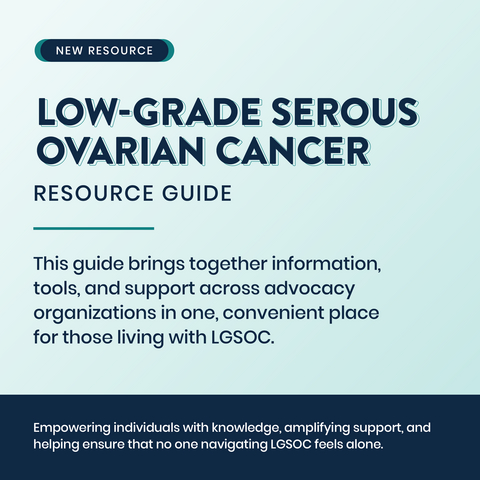
Low-Grade Serous Ovarian Cancer Resource Guide
LGSOC is a rare and distinct form of ovarian cancer that is often underrecognized and can be challenging to diagnose and manage. Patients frequently face delays in diagnosis, have limited access to disease-specific resources, and need to navigate complex treatment decisions. The LGSOC Resource Guide was created to help address these gaps by bringing together trusted educational materials and community resources into one accessible destination.
“For many people living with LGSOC, finding clear, relevant information can be an ongoing challenge—especially given how different this disease is, including how it responds to treatment,” said Nicole Andrews, chair of the STAAR Low-Grade Serous Ovarian Cancer Foundation. “As both an advocate and a patient, the LGSOC Resource Guide represents another meaningful step forward for our community. We’re not only beginning to see new treatment advances that may give patients more confidence and hope for the future, we’re also building on resources from the broader ovarian cancer patient community to bring together trusted information specific for the LGSOC community.”
In 2023, STAAR Low-Grade Serous Ovarian Cancer Foundation engaged directly with the U.S. Food and Drug Administration (FDA) through a first-ever Externally-led Patient-Focused Drug Development (EL-PFDD) meeting, bringing forward the lived experiences of patients with LGSOC and helping to establish broader recognition of LGSOC as a distinct disease requiring dedicated treatment approaches. This effort reinforced the importance of developing treatments tailored to the unique biology of LGSOC, which differs from high-grade ovarian cancer. This effort was foundational in supporting the first and only treatment currently approved by the U.S. Food and Drug Administration (FDA) for KRAS-mutated recurrent LGSOC following a prior systemic therapy, developed by Verastem Oncology.
“A diagnosis of low-grade serous ovarian cancer can feel overwhelming, with patients often asked to make life-altering decisions in just days. While LGSOC is a rare disease, that rarity does not lessen the need for information, connection, and support—it makes it even more critical,” said Emily Campbell, executive director and co-founder of Not These Ovaries. “The LGSOC Resource Guide meets patients in those moments, helping them move from feeling powerless to becoming active participants in their care.”
The LGSOC Resource Guide has compiled resources from dozens of advocacy organizations, including videos, articles, FAQs, and blog posts covering important topics such as diagnosis, treatment and care decisions, fertility and survivorship considerations, emotional wellbeing and caregiver support. It is designed as a flexible tool that individuals can return to over time, depending on their needs and stage of care.
“The LGSOC Resource Guide represents the power of collaboration across the patient advocacy community. By bringing together organizations from across the ovarian cancer and LGSOC patient advocacy community, the Guide includes resources to help patients and their families access meaningful, relevant information throughout their experience,” said Julissa Viana, senior vice president, corporate communications, investor relations, and advocacy relations at Verastem Oncology. “We are deeply grateful to the patient advocacy groups who contributed to this effort. In rare diseases like LGSOC, progress depends on working together, and this guide is an important step toward making sure no patient feels overlooked or alone and can find the resources they need wherever they are looking.”
This resource guide is intended for informational purposes only and reflects information available at the time of publication. As research and treatment options continue to evolve, content may become outdated. Verastem Oncology and its contributors assume no responsibility or obligation to update or modify any of the information contained in the resource guide. Further, Verastem Oncology and its contributors make no representations or warranties regarding the completeness or accuracy of the information and assume no responsibility for any actions taken based on its content.
The LGSOC Resource Guide is available at www.LGSOCAwarenessDay.org.
About Low-Grade Serous Ovarian Cancer (LGSOC)
LGSOC is a rare ovarian cancer that is insidious and persistent. LGSOC is distinct and different from high-grade serous ovarian cancer (HGSOC) and requires different treatment. LGSOC is highly recurrent and less sensitive to chemotherapy compared to HGSOC. Approximately 6,000-8,000 women in the U.S. and 80,000 worldwide are living with this disease. LGSOC affects younger women with bimodal peaks of diagnosis at ages between 20-30 and 50-60 and has a median survival of approximately ten years. Approximately 70 percent of LGSOC shows RAS pathway-associated mutations, and 30 percent of people with LGSOC have a KRAS mutation. The majority of patients report a negative impact of LGSOC on their mental and physical health, fertility, and long-term quality of life.
About STAAR Low-Grade Serous Ovarian Cancer
STAAR was founded by three women—Alex, Bailey, and Jess—each diagnosed with low-grade serous ovarian cancer (LGSOC). United by their passion to extend lives through research, they launched the first U.S.-based nonprofit dedicated to finding effective treatments for LGSOC. STAAR is governed and run by a volunteer board, half of whom are women with LGSOC. Because STAAR is volunteer-led, nearly every donation dollar directly benefits life-saving research. Volunteers play a vital role in STAAR and serve on committees, the board of directors, lead or help with special projects, help at events, or join monthly volunteer meetings to lend ideas.
About Not These Ovaries
Not These Ovaries is a patient-driven nonprofit dedicated to improving outcomes for those affected by low-grade serous carcinoma (LGSOC) and borderline ovarian tumors (BOT). The organization empowers patients and caregivers by providing disease-specific education, resources on biomarkers and treatment options, and guidance on finding experienced healthcare providers. It also invests in research targeting these understudied areas. 100% of donations go directly to supporting patients and funding research. Learn more at www.nottheseovaries.org.
About Verastem Oncology
Verastem Oncology (Nasdaq: VSTM) is a biopharmaceutical company committed to developing and commercializing new medicines to improve the lives of patients diagnosed with RAS/MAPK pathway-driven cancers. Our commercial and clinical pipelines are focused on novel small molecule drugs that inhibit critical signaling pathways in cancer that promote cancer cell survival and tumor growth, including RAF/MEK inhibition, FAK inhibition, and KRAS G12D inhibition. For more information, please visit www.verastem.com and follow us on LinkedIn.
View source version on businesswire.com: https://www.businesswire.com/news/home/20260508725775/en/
Media gallery