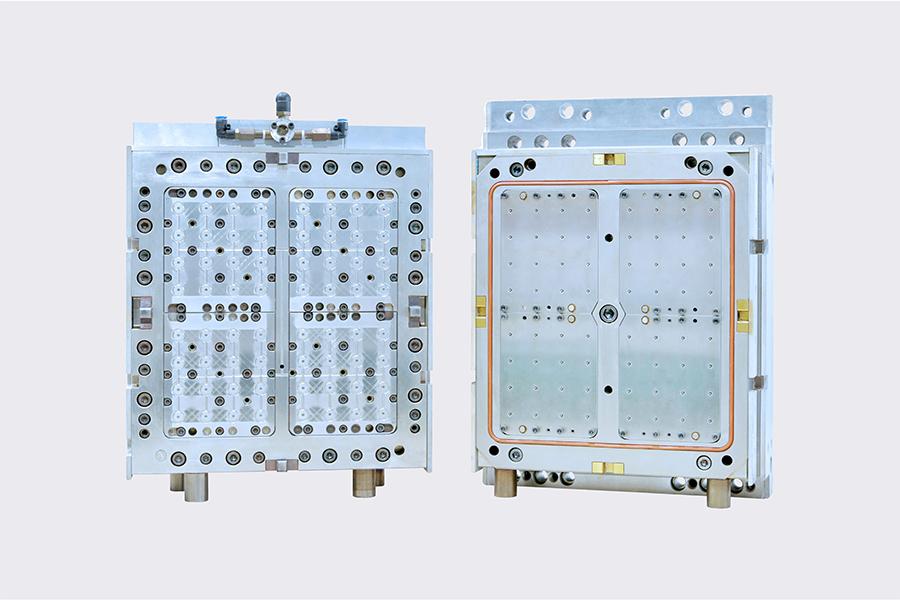

HONG KONG, HONG KONG, HONG KONG, November 26, 2026 /EINPresswire.com/ — Hongrita’s work in precision molds, liquid silicone rubber processing, and equipment integration illustrates an important principle in modern LSR Molding: increasing output requires more than adding cavities. For medical, baby-care, automotive, and consumer components, successful volume production depends on consistent filling, controlled curing, reliable part removal, and repeatable inspection. These requirements become harder to manage when a tool produces many parts in each cycle. A practical approach therefore considers the mold, material, machine, and automation system together from the earliest design stage.
Why Multi-Cavity Tooling Requires a System-Level Approach
A multi-cavity mold produces several identical components during one molding cycle. In principle, greater cavitation increases potential output without requiring the same number of separate machines. In practice, productivity depends on the proportion of parts that meet specifications, not simply the number of cavities.
Liquid silicone rubber introduces specific challenges. Its low viscosity can make thin sections easier to fill, but also increases the need for accurate shutoffs and parting surfaces to prevent flash. The two-component material must be precisely metered and mixed, remain stable before injection, and cure consistently in heated cavities. Unequal flow or temperature conditions may create differences between individual parts.
Hongrita’s published capabilities span high-cavitation tooling, LSR/LSR molding, and LSR combined with thermoplastics. This combination reflects the broader engineering demands of silicone components that must function within complex assemblies.
Designing a Multi-Cavity LSR Mold for Consistent Output
Start With Part Geometry and Cavity Balance
Before specifying cavity count, engineers should review wall thickness, sealing features, undercuts, permissible flash, and dimensional tolerances. Design-for-manufacturing analysis can identify areas where filling, venting, or demolding may be difficult.
An effective runner layout should distribute material to each cavity under comparable conditions. Gating position, flow-path length, injection pressure, and cavity geometry all influence balance. A high cavity count offers little benefit if some positions regularly produce short shots, deformation, or inconsistent dimensions.
Coordinate Cold Runners, Venting, and Curing
Unlike conventional thermoplastic molding, LSR typically enters a heated mold through temperature-controlled feed channels. Cold-runner and valve-gate arrangements can limit cured runner waste and support controlled material delivery, although their suitability depends on part design and production volume.
Venting must release trapped air without allowing excessive silicone leakage. Precise parting lines and appropriate thermal control help reduce flash and variation in cure. Hongrita reports developing its own valve cold-runner system for LSR molds, alongside modular tooling and interchangeable inserts for selected multi-cavity applications.
Building Automation Around the Entire Molding Cycle
Automation is most useful when it addresses the processes that can interrupt consistent production. Material dosing and mixing must be synchronized with injection. Mold opening should be coordinated with part ejection, robotic handling where appropriate, and downstream inspection.
Soft silicone components can stretch or distort during manual extraction. Properly designed mechanical ejection, air assistance, or robotic removal may reduce handling damage and variation. The choice depends on the part’s geometry, surface requirements, and curing condition. Automation should be assessed against actual cycle behavior rather than added after tooling is complete.
Inspection is equally important. Vision systems or dimensional checks can help identify flash, missing parts, surface defects, and cavity-specific patterns. Linking inspection records to cavity positions allows teams to isolate recurring problems without treating every molded part as an identical data point.
Hongrita describes its manufacturing model as an integration of molds, customized molding equipment, supporting devices, detection systems, and control software. Such coordination provides a useful framework for developing an LSR molding solution in which part removal and quality verification are considered alongside injection.
Published Tooling Examples Across Different Applications
A concrete example is Hongrita’s LSR harness plug mold, listed with 64 cavities, hardness 40 silicone, and a 20-second cycle. The company describes automatic ejection and a no-flash configuration for this project. Harness plugs protect and seal cable passages, making dimensional consistency and surface condition relevant to automotive and electronic assemblies. The published specifications describe one tooling application, not a cycle-time guarantee for other parts.
In baby-care manufacturing, Hongrita lists a two-component LSR pacifier mold using a 4+4 cavity arrangement and a 45-second cycle. This case illustrates a different challenge: coordinating two silicone molding stages while controlling material interfaces, positioning, and release of a flexible finished component. Applicable material and product-safety requirements must also be validated for the intended market.
A further example combines polycarbonate and LSR in a 4+4 cavity orange-peeler mold. The published tooling uses an index-plate mechanism for transfer and rotation between molding operations. This demonstrates how multi-component equipment can integrate a rigid substrate with a softer functional surface, potentially reducing separate assembly operations.
Taken together, these examples show why cavity count should follow the product’s material combination, geometry, and handling requirements rather than determine the design in isolation.
Validating Production Before Scaling Up
A practical qualification process should sample every cavity, not only representative positions. Engineers can measure dimensions, inspect parting lines, assess functional performance, and compare results across repeated cycles. For sealing components, leakage or compression-related testing may be more informative than appearance alone.
Trial runs should also assess start-up stability, material changeovers, removal reliability, inspection coverage, and maintenance access. Process settings need documented operating limits so that corrections do not depend entirely on individual operators. Where required, traceability should connect material batches, machine conditions, and inspection results.
Multi-cavity tooling may require a greater initial investment, especially when valve-gated runners and automated handling are involved. The relevant economic measure is therefore sustained production of acceptable parts, including scrap, labor, downtime, and upkeep.
The Direction of LSR Manufacturing
Demand for compact seals, soft-touch interfaces, medical components, and integrated consumer products is increasing the importance of precision silicone processing. At the same time, manufacturers are placing greater emphasis on automation, production traceability, and reduced material waste.
Founded in 1988, Hongrita has developed operations in Shenzhen, Zhongshan, and Penang, combining precision tooling with molding and equipment integration. Its documented LSR projects provide examples of how multi-cavity design and multi-component processes can be adapted to different applications rather than applied as a single standard configuration.
Conclusion
Effective multi-cavity LSR production begins with a balanced tool and extends through controlled dosing, curing, demolding, inspection, and process validation. Higher cavitation is valuable only when it produces stable, usable output over time. Hongrita’s documented tooling examples demonstrate the practical connection between mold architecture and automation, while also showing that each part requires its own engineering assessment.
Company background and tooling information: https://www.hongrita.com/
Hongrita
Hongrita
email us here
Legal Disclaimer:
EIN Presswire provides this news content “as is” without warranty of any kind. We do not accept any responsibility or liability
for the accuracy, content, images, videos, licenses, completeness, legality, or reliability of the information contained in this
article. If you have any complaints or copyright issues related to this article, kindly contact the author above.

Media gallery