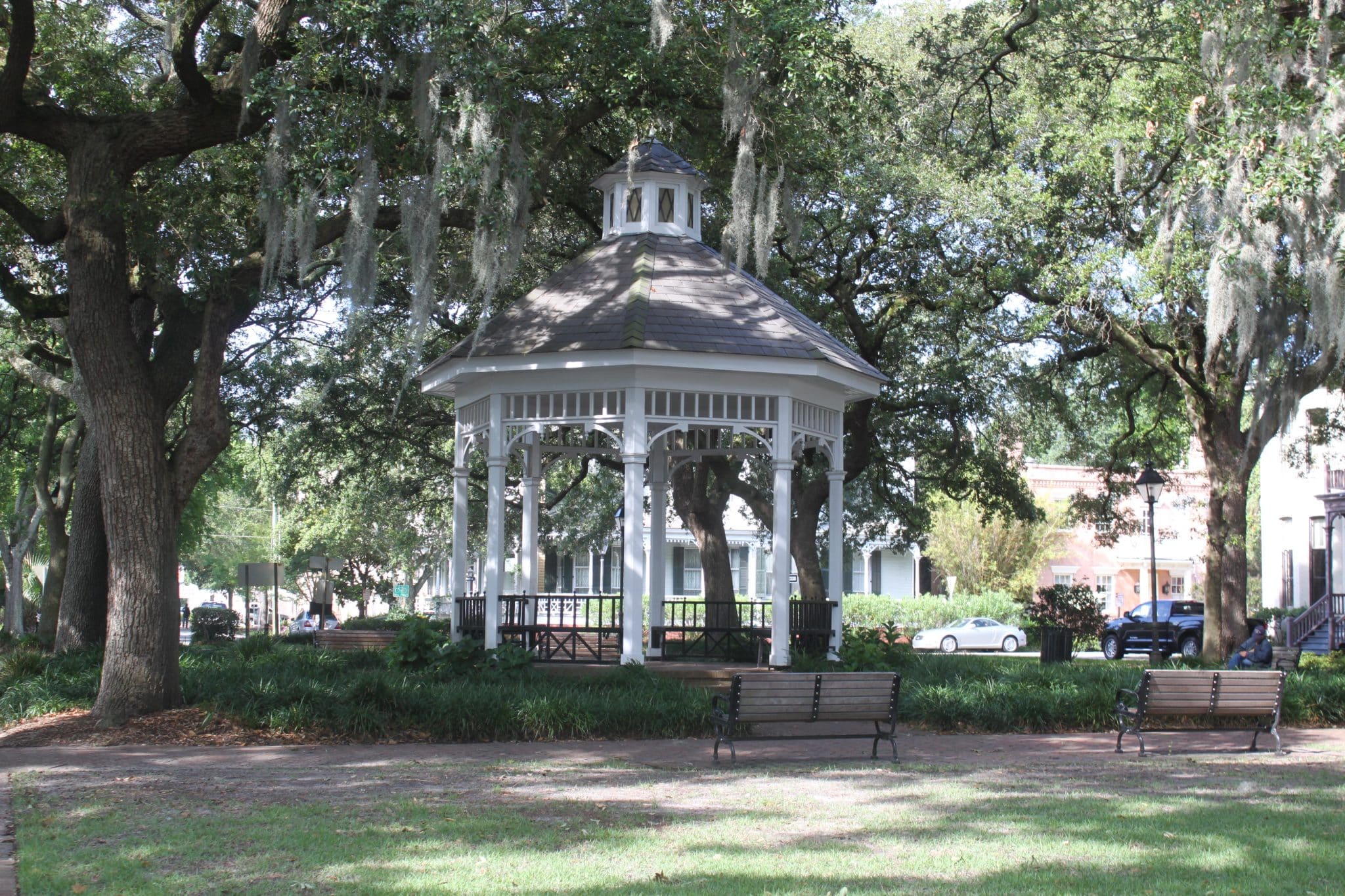
As America nears its 250th anniversary, burial-ground findings in Savannah raise questions about memory and democracy.
NEW YORK, NY, UNITED STATES, May 5, 2026 /EINPresswire.com/ — Recent archaeological findings confirming the likely presence of more than 80 unmarked graves beneath Savannah’s Whitefield Square are intensifying calls for memorialization, historical correction, and public reckoning at one of the city’s most visited historic sites.
The findings, released by the LAMAR Institute following a ground-penetrating radar (GPR) survey commissioned by the City of Savannah, identified more than 80 potential burial anomalies beneath Whitefield Square, along with two larger burial clusters for which no exact count could be determined. The non-invasive study was commissioned to help inform historical-marker planning and assess whether burials connected to Savannah’s historic “Negro Burial Grounds” likely remained beneath the square.
According to the report, some burial anomalies appear as shallow as approximately 12 inches below the surface, with additional anomalies extending roughly 2 to 3.5 feet deep beneath an active public square now frequented by tourists, wedding photographers, and daily pedestrian traffic.
For many residents, historians, and descendants, the findings represent more than an archaeological discovery. They provide scientific confirmation of a history that was overlooked in public narratives about Savannah’s Black community.
Savannah Mayor Van Johnson publicly described Whitefield Square as “sacred ground,” reflecting a growing recognition that the square is not simply a civic landmark, but a burial place connected to generations of enslaved and free Africans whose labor helped build the city while their burial sites remained largely unacknowledged.
The archaeological confirmation follows years of civic advocacy connected to the Rest With Honor Savannah initiative, a research and public petition campaign launched in 2020 by New York-based artist and journalist Lauri Lyons during the COVID-19 pandemic. Working remotely from New York, Lyons conducted archival research, initiated public petitions, and raised early sustained questions about the historical relationship between Savannah’s public squares and the city’s documented Negro burial grounds.
Early reporting by Tina Brown of the Savannah Tribune helped bring broader public visibility to the issue, while commentary by Dr. Maxine L. Bryant in the Savannah Morning News expanded public discussion around the historical implications of the burial-ground research. Community outreach and petition efforts were further advanced through engagement by Savannah African Art Museum staff, including Lisa Jackson, alongside early local advocacy by community organizer Patt Gunn.
The broader initiative contributed to a major civic milestone in 2023, when Savannah City Council voted to rename Calhoun Square, previously honoring pro-slavery politician John C. Calhoun, as Taylor Square in honor of Susie King Taylor, the educator, Civil War nurse, and freedom advocate born into slavery in Georgia. The renaming marked the first renaming of a Savannah city square in approximately a century.
City officials have also announced plans to fund a future GPR survey of Taylor Square to determine whether additional burial sites remain beneath the property.
The Whitefield Square findings are also prompting renewed scrutiny of the square’s namesake, Reverend George Whitefield, the influential evangelical preacher and founder of Bethesda Orphanage in Savannah, now known as Bethesda Academy, one of the oldest continuously operating child-care institutions in the United States.
Historical records show that Whitefield advocated for the legalization of slavery in colonial Georgia, originally established as a slave-free colony, in order to financially sustain the orphanage and plantation operations connected to it. At his death in 1770, Whitefield did not emancipate the enslaved children and adults under his control, instead bequeathing them to Selina Hastings, Countess of Huntingdon.
Advocates say the findings beneath Whitefield Square raise larger national questions about whose histories are preserved, whose histories are buried, and how American cities choose to remember the people whose labor, suffering, and contributions helped build them.
Lyons suggests Whitefield Square becomes an official memorial site renamed in honor of W.W. Law, a Savannah civil rights leader.
As the United States approaches the 250th anniversary of the nation, the discoveries beneath Whitefield Square are becoming part of a broader national reflection on democracy, historical truth, and public memory. For many observers, the findings underscore that the American story is not only found in monuments, archives, and celebrations, but also in the histories long hidden beneath the ground itself.
Lauri Lyons
Lauri Lyons Creative Media LLC
lauri@laurilyons.com
Legal Disclaimer:
EIN Presswire provides this news content “as is” without warranty of any kind. We do not accept any responsibility or liability
for the accuracy, content, images, videos, licenses, completeness, legality, or reliability of the information contained in this
article. If you have any complaints or copyright issues related to this article, kindly contact the author above.

Media gallery